

 |
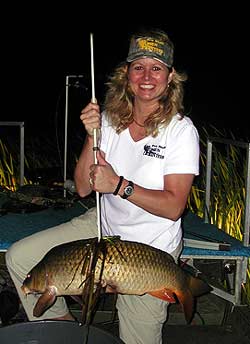
| The author's first bowfishing trophy, a 13-pound carp shot within five feet of the boat. |
My First Bowfishing Experience
Despite more than 20 years of bowhunting experience, I had never taken to the water with my bow. I had watched bowfishing shows, read about shooting carp with a bow, and talked for years about going "someday." It looked like fun and seemed like the perfect off-season adventure.
What held me back was simple: I did not know much about bowfishing, and I had made a few wrong assumptions.
What I Got Wrong
- I thought getting started would take a lot of gear and time.
- I thought I needed a fully outfitted bowfishing boat.
Both assumptions were completely wrong.
My friend Linda Thompson and I found that out after spending a couple of June days on the river with Cindy Braun, co-owner of AMS Bowfishing. In just one trip, we learned how simple, fun, and addictive bowfishing really is.
Start with the Basics
The first step is getting a fishing license. In most states, a standard fishing license is all you need for bowfishing. Many states allow year-round opportunities to shoot rough fish, and some allow other species as well. Always check your local laws before heading out.
The first piece of gear you need is a bow. I borrowed an old compound bow set at 45 pounds for my first trip. Bowfishing bows do not need to be high-tech. In fact, recurves are often a great choice because they are simple and work well for fast shooting.
Whether you shoot a compound or recurve, a draw weight between 40 and 50 pounds is usually enough. Most bowfishing shots are quick and close, often less than 10 feet, so heavier draw weights are not needed and can wear you out faster.
Key Gear You Need
- Bow: Compound or recurve
- Draw weight: 40 to 50 pounds
- Rest: Simple prong-style rest
- Reel: A reel made specifically for bowfishing
- Arrow: Heavy-duty fiberglass bowfishing arrow
- Point: Quick-release fish point
The reel is especially important for safety. Arrow snap-back can cause serious injury. It can happen when the wrong reel is used, when the line gets tangled, or when the line is tied directly to the back of the arrow shaft. Your line should release automatically when you shoot and stay free of tangles. Before every shot, make sure the line is in front of the rest and clear of any obstruction.
The AMS Retriever reel and arrow Safety Slides we used made the process simple and safe. The reel attaches to the sight holes on the bow's riser and holds the Dacron line in a plastic bottle until the shot is taken. When it is time to retrieve the fish, you just pull the trigger and reel it in.
Quick Bowfishing Tips
No sights are needed. Instinctive shooting works best because bowfishing is close-range and fast-paced. There is rarely time to line up a sight pin before the fish moves.
Aim low. Because of water refraction, you usually need to aim about six inches below the fish, or at the belly of a large fish, to hit it cleanly. It may feel strange at first, but it becomes natural after a few shots.
 |
| A heavy-duty fiberglass bowfishing arrow rigged with an arrow-slide safely connects the Dacron line from bow to arrow. |
A heavy-duty fiberglass bowfishing arrow is another essential piece of equipment. No vanes or feathers are needed because they only interfere with the setup. The arrow should be rigged with an arrow-slide for safety, and a quick-release fish point finishes the setup.
What to Bring
- For daytime: Sunscreen, a hat, and polarized sunglasses
- For nighttime: Bug spray or a lightweight shirt for insect protection
Boat Setup and Other Options
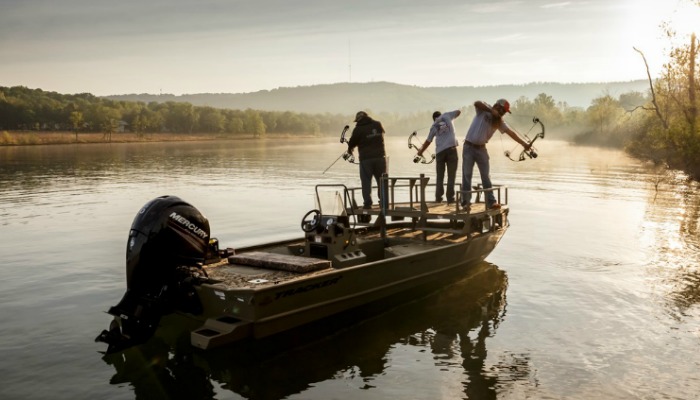
You do not need a fancy boat to get started. Any shallow, flat-bottom boat can work well. You can also shoot from shore or wade slowly through flooded areas or shallow water.
A trolling motor helps you move through the shallows, but a friend with a paddle can do the job too. For more advanced setups, some bowfishers prefer airboats or air fans for moving through cattail marshes in search of carp.
For night fishing, strong lanterns or flashlights are important, and mounted halogen lights are one of the best choices. Raised platforms can help with visibility and shooting angles, but they are not required. Start with what you have and upgrade later if you decide bowfishing is for you.
My First Trip on the Water
Once our gear was ready, we hit the water. We launched the AMS Bowfishing boat at 9 p.m. Warm winds and recent flooding made visibility poor during the first hour, but as the night went on, the wind settled and the action picked up.
We trolled along the cattail edges looking for "rattlin' reeds," or reeds shaking from carp moving through them. Then I saw a fin break the surface. I drew, released, and connected.
That first fish sealed it for me. I reeled in my first bowfishing trophy, a 13-pound carp, with a huge smile on my face. Soon after, Cindy connected, and then Linda brought one in too. The action was nonstop, and the fun came fast.
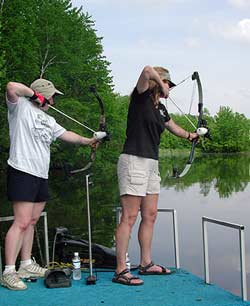 |
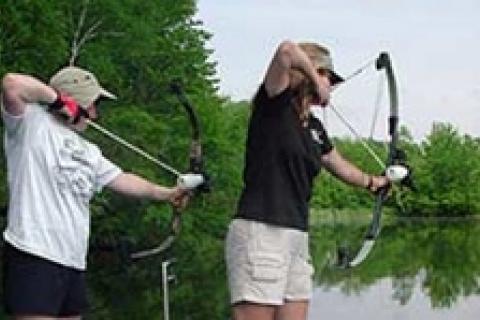
| Cindy Braun, left, and the author come to full draw on two passing carp. |
We got so caught up in the action that we lost track of time. By the time we checked our watches, it was 2 a.m. We finally called it a night so we could rest up for daytime bowfishing the next morning.
The next day brought thick cloud cover, which made spotting fish difficult. To make things even harder, the peak spawning period was nearly over for the year. Even so, we still saw carp rolling and slapping in the shallows and moved the boat toward shore.
Again and again, we eased in with the trolling motor, came to full draw, and watched the fish disappear in an instant. Finally, the sun broke through, visibility improved, and we started boating a few fish. After a long day, we headed in and promised ourselves we would return the following May when the spawn was at its peak.
Why Bowfishing Is Worth Trying
By the end of the trip, I had learned a lot about bowfishing and discovered a new kind of hunting I truly enjoyed. I could not wait to get back on the water with my new bowfishing friends.
Cindy also opened the door to even more possibilities with stories about gar, alligator, and shark bowfishing trips. For serious bowfishers, there are carp shoots, tournaments, and plenty of chances to chase trophy-sized fish in both freshwater and saltwater.
Why It Is Easier Than Most People Think
- The gear is simple
- The shooting is easy to learn
- You do not need a specialized boat to begin
- It is affordable and family-friendly
- It is a great way to stay sharp in the off-season
One thing was clear by the end of the trip: bowfishing was much easier to prepare for and learn than I had ever imagined. I only wished I had tried it sooner.
With simple equipment, easy shooting, and an abundance of rough fish across the United States, bowfishing offers outstanding off-season action. It is also a cost-effective way for people of all ages to enjoy time outdoors.
For hunters dealing with the summer slowdown and looking for a way to keep their bow skills sharp, bowfishing is hard to beat.
Shop Bowfishing Gear Online
Ready to give bowfishing a try? Find bows, reels, arrows, and other essential gear at Bass Pro Shops and Cabela's. Whether you are just getting started or looking to upgrade your setup, you can shop equipment built for safe, simple, and effective bowfishing.
Visit a Store Near You
Need help choosing the right bowfishing setup? Stop by a local store and speak with an outfitter about bows, reels, arrows, and other must-have gear. Use the Store Locator to find the nearest Bass Pro Shops or Cabela’s location.
- 53250 views