


You may not think of a pair of hunting boots as a personal item, but after a full day in the field, your feet will definitely disagree.
To stay comfortable from sunrise to pack-out, you need to match your boots to your body, not just your foot size. Shop Cabela’s entire lineup of hunting boots and you will see how wide the range really is.
Proper hunting boots can make or break your hunt. Make sure you are equipped with a pair that fits both your feet and your style of hunting.
At this point you might be thinking this sounds dramatic, but everyone is built differently. Sure, we all know our left and right feet aren’t exactly the same, but that is not what matters most. Your internal thermostat plays a bigger role in boot choice than most hunters realize. According to Cabela’s footwear specialists, the big four things to focus on are fit, ventilation, insulation and intent.
Once you start thinking about boots in those four categories, everything makes more sense. The first three are directly tied to the last. The way you plan to use your boots affects how much warmth you need, how much air they need to move and how snug the fit should be.
Fit
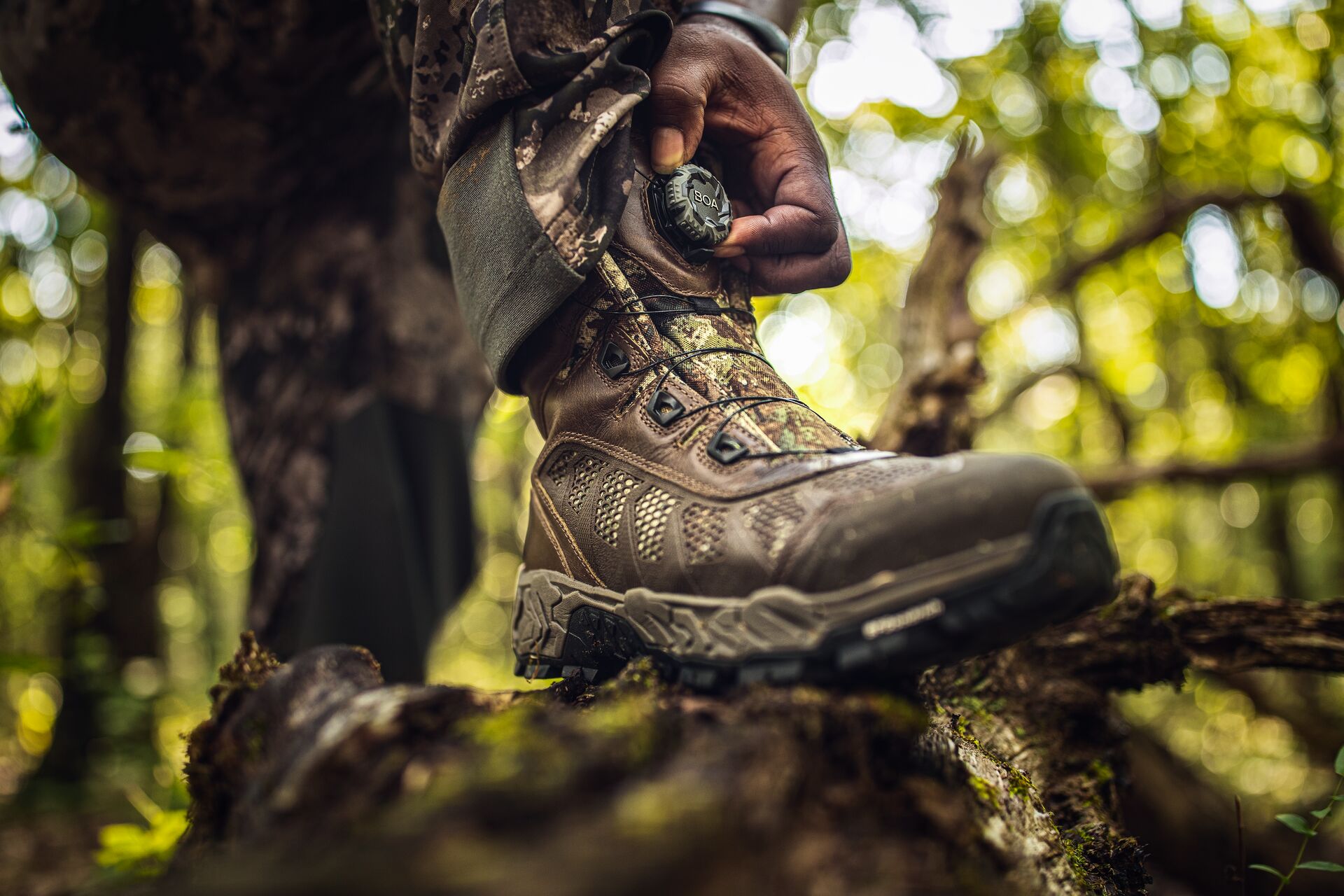
Fit seems straightforward, but plenty of hunters get it wrong. Many people try boots on with thin casual socks, then go hunting in heavy wool. That completely changes the fit and causes toe pressure, blisters and heel slip.
Always try on your boots with the socks you plan to wear during your hunt. If you run two layers, wear both. This is the only way to judge the real fit.
One of the best-fitting boots in the lineup is the Cabela’s Axis II Insulated Waterproof Hunting Boot. It uses waterproof-coated leather and tough Armor-Flex fabric for structure, along with high-rebound footbeds that settle nicely around your foot.
Shop more hunting bootsInsulation
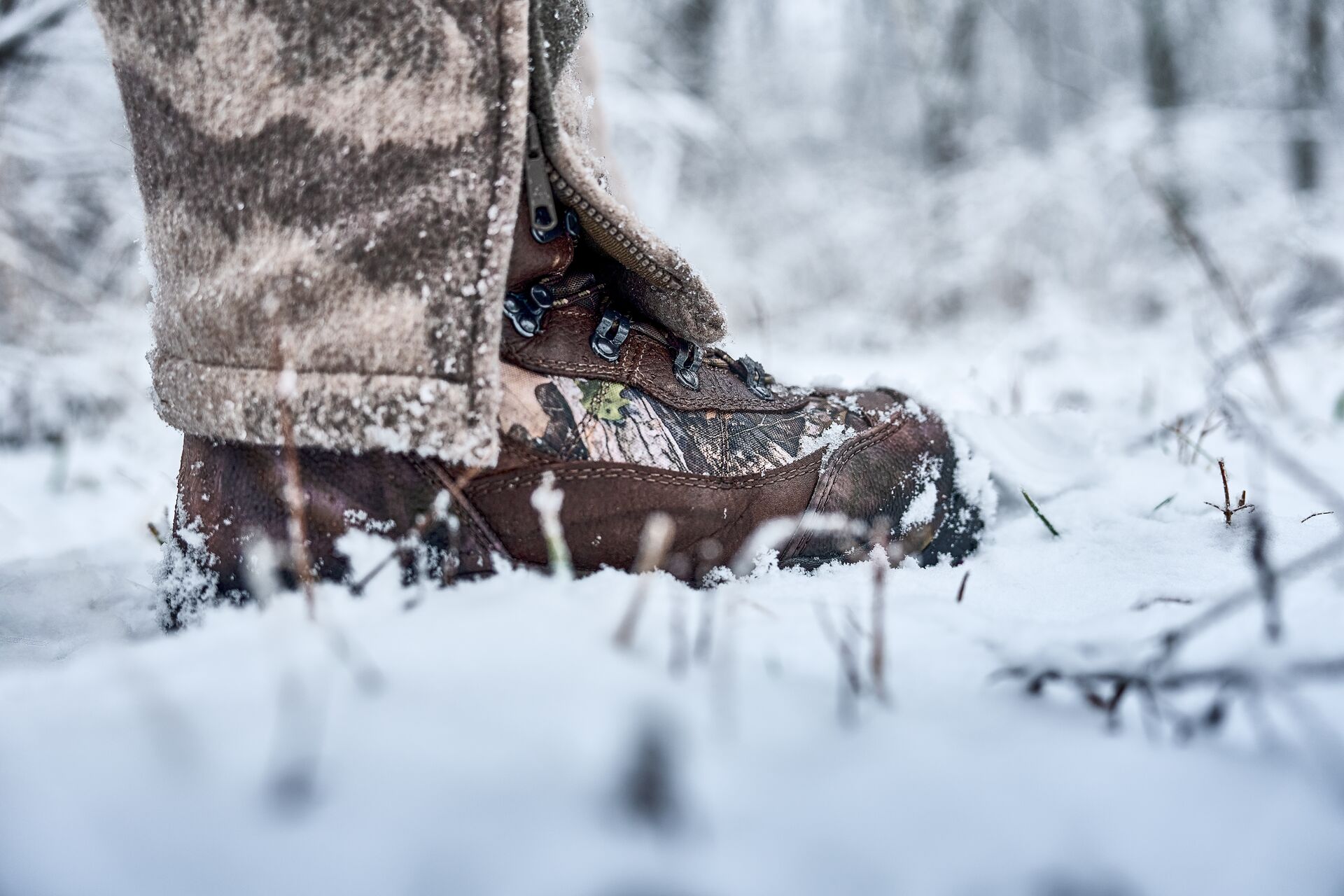
Insulation is the biggest factor in warmth. The trick is choosing the right level for your body type and your hunting style. If you sit for long periods in freezing temperatures, you lose heat quickly and need more insulation. If you are hiking ridges, stalking elk or covering miles of pheasant ground, your body generates heat and you need far less.
Once you stop moving, your heat production stops too, and that is when cold toes show up.
General insulation guidelines:
- Uninsulated to 200 grams: early season or high movement.
- 400 to 800 grams: most fall hunting situations.
- 1000 grams and up: cold weather and low movement.
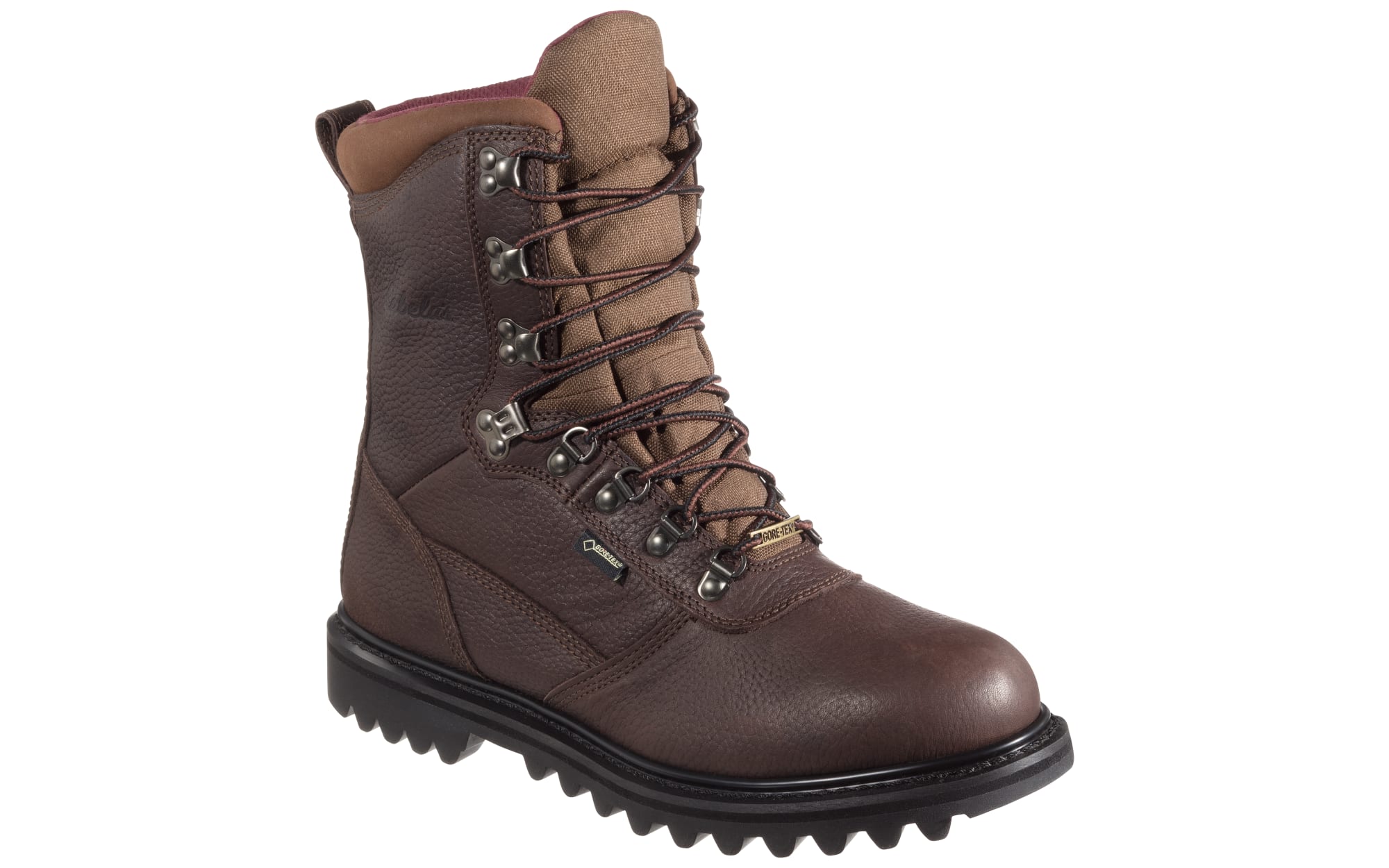
A good example of the popular mid-range category is the Cabela’s Iron Ridge GORE-TEX Insulated Hunting Boot, built with 400 grams of Thinsulate. It delivers warmth without bulk and keeps your feet comfortable from cool mornings to active mid-day hikes.
For extreme cold, the LaCrosse AlphaBurly Pro 1600 belongs at the top. It carries 1600 grams of insulation and is built for bitter late-season hunts when you might be sitting long hours in a stand or blind.
Shop more insulated bootsWaterproofing
Moisture is a part of almost every hunt. Grass soaked with morning dew, a creek crossing or a simple drop in the weather can soak your boots fast. Once your feet are wet, the day is usually over.
There are two main types of waterproofing.

Waterproof membranes
These are sewn inside the boot to block outside water while allowing sweat vapor to escape. GORE-TEX is the gold standard, and you will find it in the Cabela’s Instinct Venatus and the Cabela’s Iron Ridge.
The Instinct Venatus pairs its GORE-TEX membrane with an Armor-Flex exterior that stands up to brutal terrain and thick brush. This is the boot for serious backcountry hunts where sharp rocks, steep country and unpredictable weather are the norm.
Rubber and neoprene
For total waterproofing and scent-free performance, rubber boots take the lead. The LaCrosse AlphaBurly Pro 1600 is a top example. It sheds water, blocks scent and keeps you warm even when standing in snow or marsh water for hours.
Shop more waterproof bootsBoot Designs and Categories
Hunting boots fall into three main groups. Choosing the right one starts with understanding where and how you hunt.
Upland
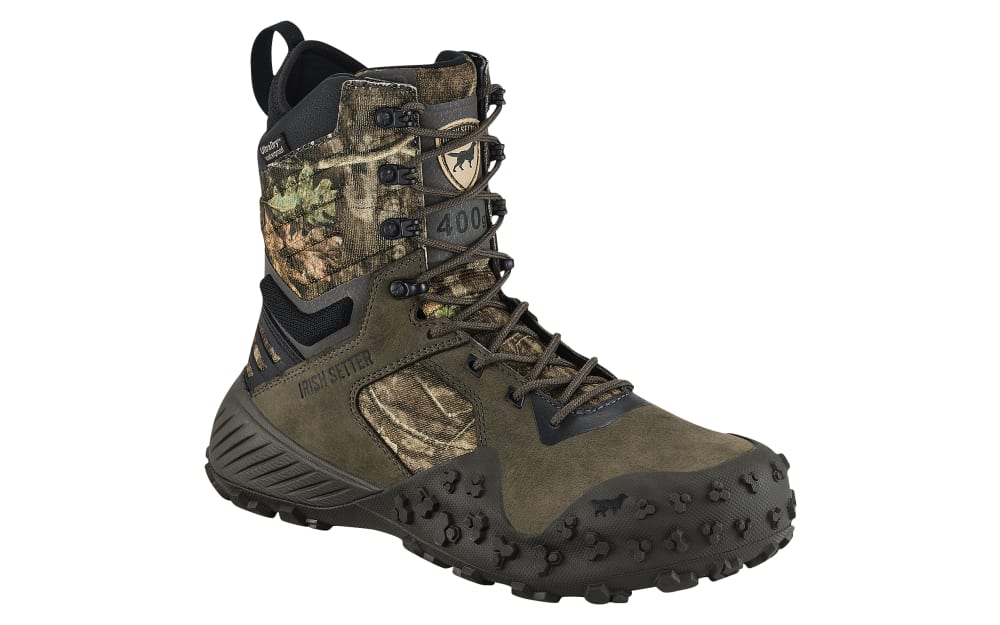
Upland boots are lighter, shed mud and keep you moving fast. They are designed for hunters who put down miles all day.
The Irish Setter VaprTrek 400 is a great example of a high-mobility boot built for covering ground. It is lightweight, warm and uses waterproof leather and abrasion-resistant nylon. The Hex Lite outsole grips from every angle, which is helpful on uneven upland terrain.
Multi-Purpose
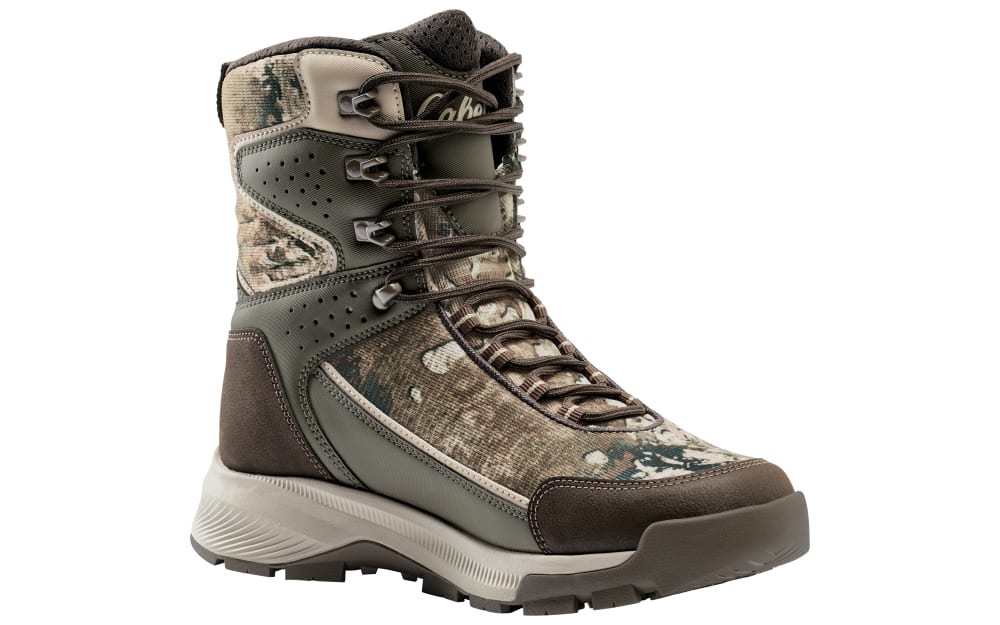
This is the biggest category and covers everything from big game to upland. These boots balance traction, durability, support and insulation.
The Cabela’s Axis II fits here with its waterproof-coated leather, Armor-Flex reinforcement, 400 grams of Thinsulate and high-grip outsole.
The Iron Ridge also belongs in this group, especially for hunters who prefer full-grain leather and a more traditional, long-lasting construction.
High Country
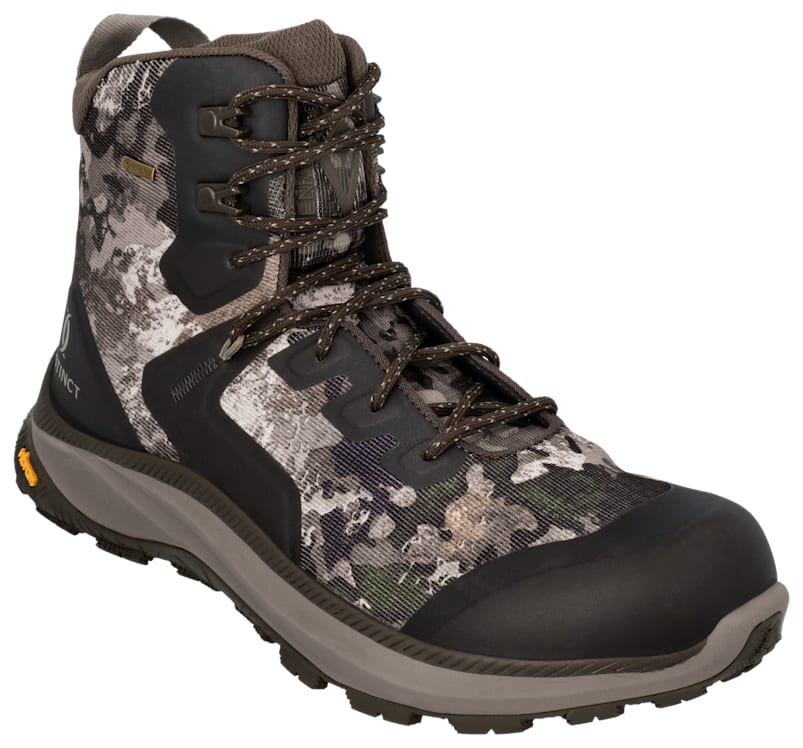
High country hunts demand more support and more durability than almost any other style. Long climbs, heavy packs and rocky terrain require a boot built for abuse.
The Cabela’s Instinct Venatus is engineered for this environment. With a Vibram XS Trek outsole, CMEVA midsoles and full Armor-Flex protection, it is built for steep ground and all-day pursuit.
Rubber Hunting Boots
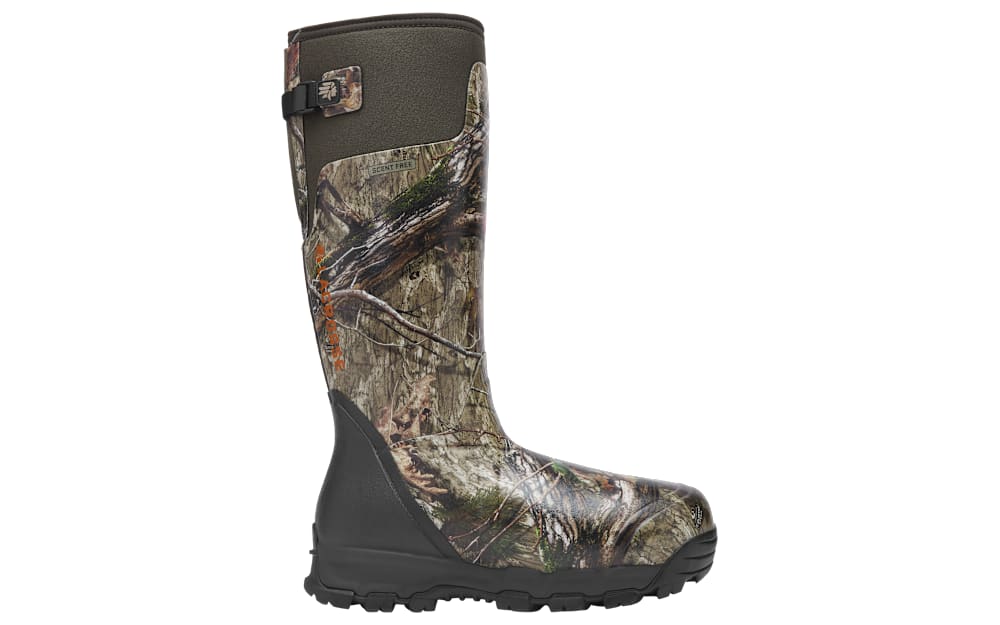
When conditions turn sloppy or you need to cross water, rubber boots are the way to go. They are scent free and completely watertight.
The AlphaBurly Pro 1600 is built from rubber over neoprene for added warmth and flexibility. The Burly Pro outsole sheds mud fast and provides solid traction even in thick muck.
Before You Choose, Keep These Points in Mind
- Make sure they fit right
A proper fit is the number one factor in comfort. Try them on with your hunting socks. - Do not choose a boot that is too short
Your toes need room, especially when walking downhill. - Allow break-in time
Supportive boots need miles to soften and shape to your feet. Never take brand new stiff boots on a major hunt. - Take care of your boots
Leather needs regular conditioning and waterproofing. Rubber should be stored in a cool, dry place. - Do not forget your socks
The wrong socks ruin good boots. Choose moisture-wicking, non-cotton socks that work with your boot’s breathable system.
-
Cabela's Axis II Insulated Waterproof Hunting Boots for Men
- Waterproof-coated leather
- abrasion-resistant Armor-Flex fabric
- 400-gram 3M Thinsulate Insulation
- Impact-absorbing EVA midsoles
-
Cabela's Instinct Venatus GORE-TEX Hunting Boots for Men
Shop Now- Ultra-rugged Armor-Flex exterior
- Ultralight TC3 OrthoLite memory-foam insoles
- Shock-absorbing CMEVA midsoles
- Breathable open-cell foam padding
-
Cabela's Iron Ridge GORE-TEX Insulated Hunting Boots for Men
- 100% waterproof, breathable GORE-TEX membranes
- Moisture-wicking linings
- 400-gram 3M Thinsulate Insulation
- Steel shanks for stability
-
Irish Setter VaprTrek 400 Insulated Waterproof Hunting Boots for Men
- 400-gram PrimaLoft Insulation
- UltraDry waterproof/breathable technology
- Hex Lite rubber outsoles
- Armatec heel panels
-
LaCrosse AlphaBurly Pro 1600 Insulated Hunting Boots for Men
- 1,600-gram 3M Thinsulate Insulation
- Alpha Construction
- Removable EVA footbeds
- Back gussets with straps adjust to your calf size
- 18411 views